Running a fast-food operation rewards speed, predictability, and tight margins — three things that get harder as the menu grows, the rush hits, and inventory drifts. A Restaurant Management System (RMS) is the back-of-house software that ties order flow, stock, and payments together so the floor doesn't drown in friction.
So what actually belongs in a fast-food RMS, and where do operators get the most leverage?
The core components of a fast-food RMS
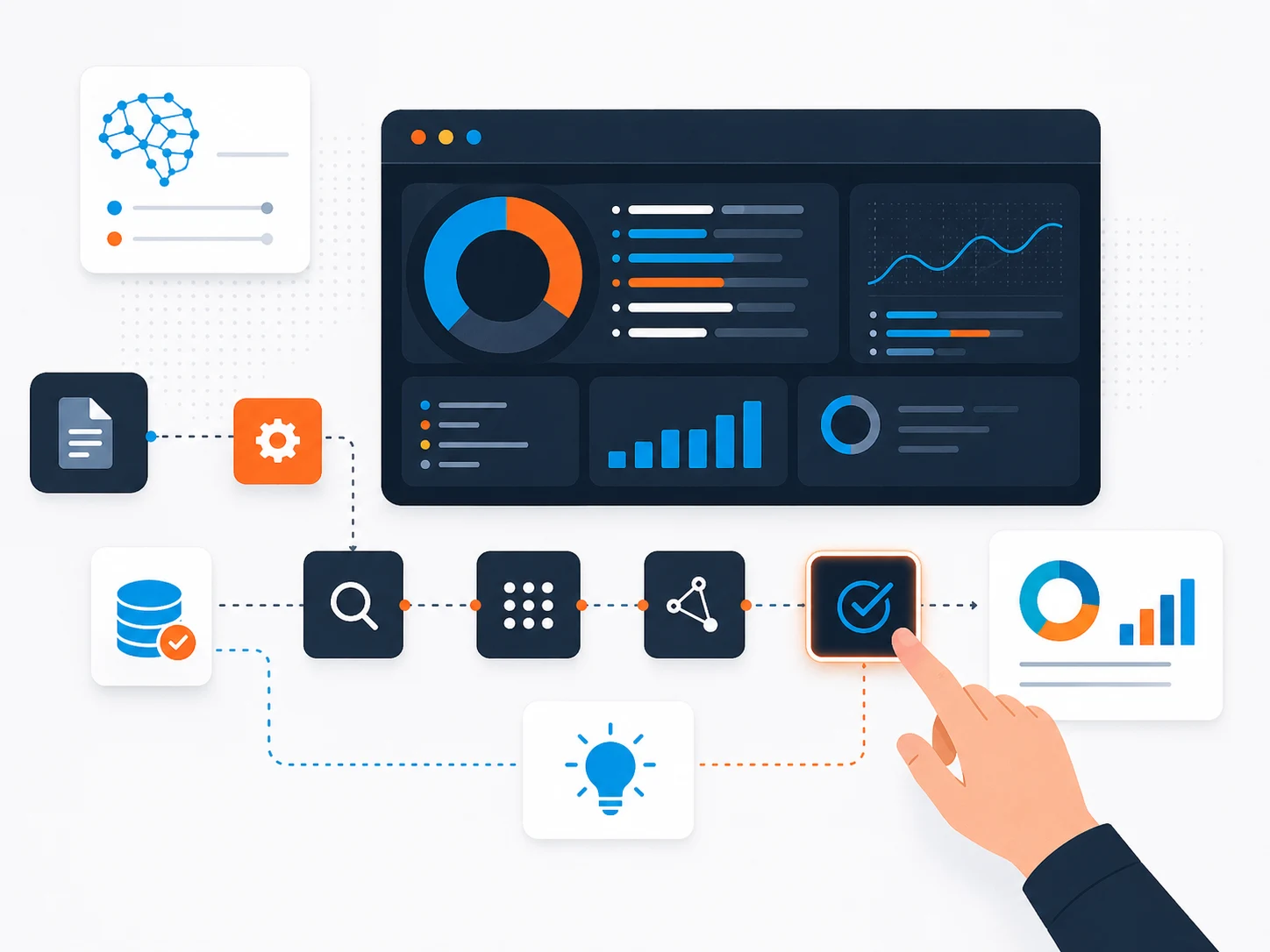
A restaurant management system is the operational hub: order capture, inventory, payments, and reporting in one place rather than four. The integration is the point — the moment any of these live in a separate spreadsheet or standalone tool, reconciliation eats time the floor doesn't have.
Key features
- Order management — taking, routing, and tracking orders so the kitchen and counter stay in sync.
- Inventory control — ingredient-level tracking that flags low stock before it becomes a 86'd menu item.
- Point-of-sale (POS) — payment processing tied to the order record, not a separate transaction.
- Reporting and analytics — sales, item mix, and labor visibility you can act on the next shift, not next month.
How an RMS changes day-to-day operations
Speed and consistency at the counter
Fast-food economics live or die on throughput. An RMS that auto-routes orders to the right station, prints to the right printer, and keeps the queue visible reduces the small coordination errors that compound during a rush.
Customer-facing extensions
Once the back-end is integrated, self-order kiosks, mobile ordering, and loyalty programs become incremental rather than parallel systems. That's usually where operators see meaningful uplift in average ticket size — not from the kiosk itself, but from the menu logic running behind it.
An integrated RMS is less about any one feature and more about removing the gaps between them. The gaps are where the margin leaks.
Inventory and waste
Real-time stock levels, low-inventory alerts, and item-level depletion against sales let an operator see waste as it happens rather than at month-end close. For a category with 20–30% food cost, that visibility is where most of the ROI shows up.
The role of POS in a fast-food stack
The POS is the system of record for every transaction — and when it's tightly coupled to the rest of the RMS, it doubles as the source of truth for sales analytics, discounts, and loyalty redemptions. A POS bolted on as a separate vendor tends to drift out of sync with the kitchen and inventory side, which is the failure mode integrated platforms exist to prevent.
Common payoffs from a POS integrated with the rest of the stack:
- Faster checkout — no double-entry, no reconciliation.
- Accurate sales reporting — item-level revenue and cost tied to the same transaction.
- Loyalty integration — earn and redeem at the register without staff workarounds.
- Secure payment processing — a single PCI scope rather than several.
Choosing between integrated platforms and best-of-breed
The standard trade-off: an integrated RMS is faster to deploy and easier to support, while a best-of-breed stack (separate POS, inventory, and ordering vendors) gives you more control and easier swaps. For most independent and small-chain operators, the integration tax of best-of-breed outweighs the flexibility — the staff time spent reconciling systems is real and it doesn't show up on a vendor invoice.
The short version
A fast-food RMS isn't a luxury, but it isn't magic either. The operators who get the most out of it are the ones who treat the integration — order, inventory, POS, reporting — as the product, and treat the individual modules as interchangeable. Pick the platform that keeps those four in lockstep, and most of the second-order benefits (kiosks, loyalty, analytics) follow.