Skipper Hospitality
2021 - 2024
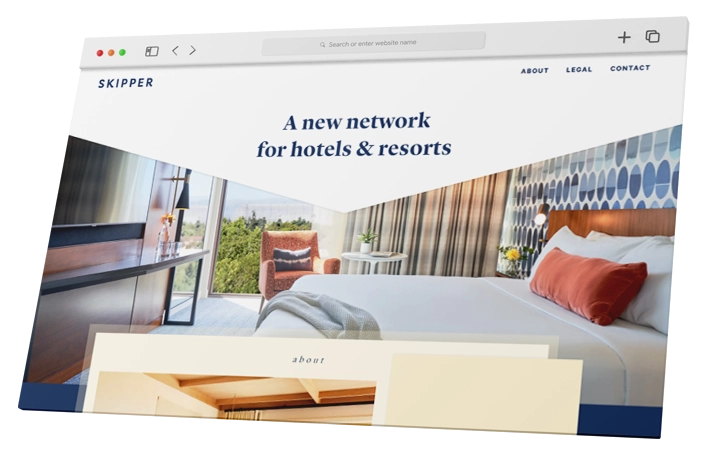
Skipper Hospitality began as a digital platform provider for boutique and independent hotels, offering a managed CMS — the Skipper Platform — together with statically generated hotel marketing websites built on Eleventy (11ty). ReformedTech supported Skipper through our staff augmentation service, with developers working as part of their team across the lifetime of the engagement.
In the platform phase, our developers contributed to the Skipper Platform CMS dashboard (React + GraphQL) and to the 11ty-based hotel sites it powered, which shared a common web-components library and an Apollo GraphQL data layer. Hotels whose digital experiences ran on the Skipper Platform our team contributed to building included:
- Marram
- Ameswell
- Journey
- Roger
- Sundance
- Pod
Skipper later pivoted to building a hospitality booking engine — a Python backend on FastAPI and Pydantic, with Alembic-managed schema migrations, paired with an embeddable booking widget written in Svelte + TypeScript on Vite. Our developers contributed across both the API and the widget.
Our dedicated team for Skipper spanned design, engineering, and QA — UI/UX designers, lead and senior frontend developers, senior backend developers, and QA engineers — working alongside Skipper's product team across both the platform and booking-engine phases.
The booking engine was subsequently acquired by Safara360, and our team continued supporting the platform through the post-acquisition transition. The Skipper-side engagement wound down in December 2024; some of our developers were retained directly by Safara360 to continue supporting the platform under its new ownership (see our Safara360 case study).
Engagement context
ReformedTech work on Skipper Hospitality combined product thinking, implementation, and practical delivery support. The goal was not only to ship screens or code, but to make the workflow usable for the people running the operation day after day.
Our team typically contributes across discovery, interface design, frontend engineering, backend integration, QA, deployment, and post-launch iteration. That lets clients keep one accountable delivery partner while still getting the specialist skills needed for a production software project.